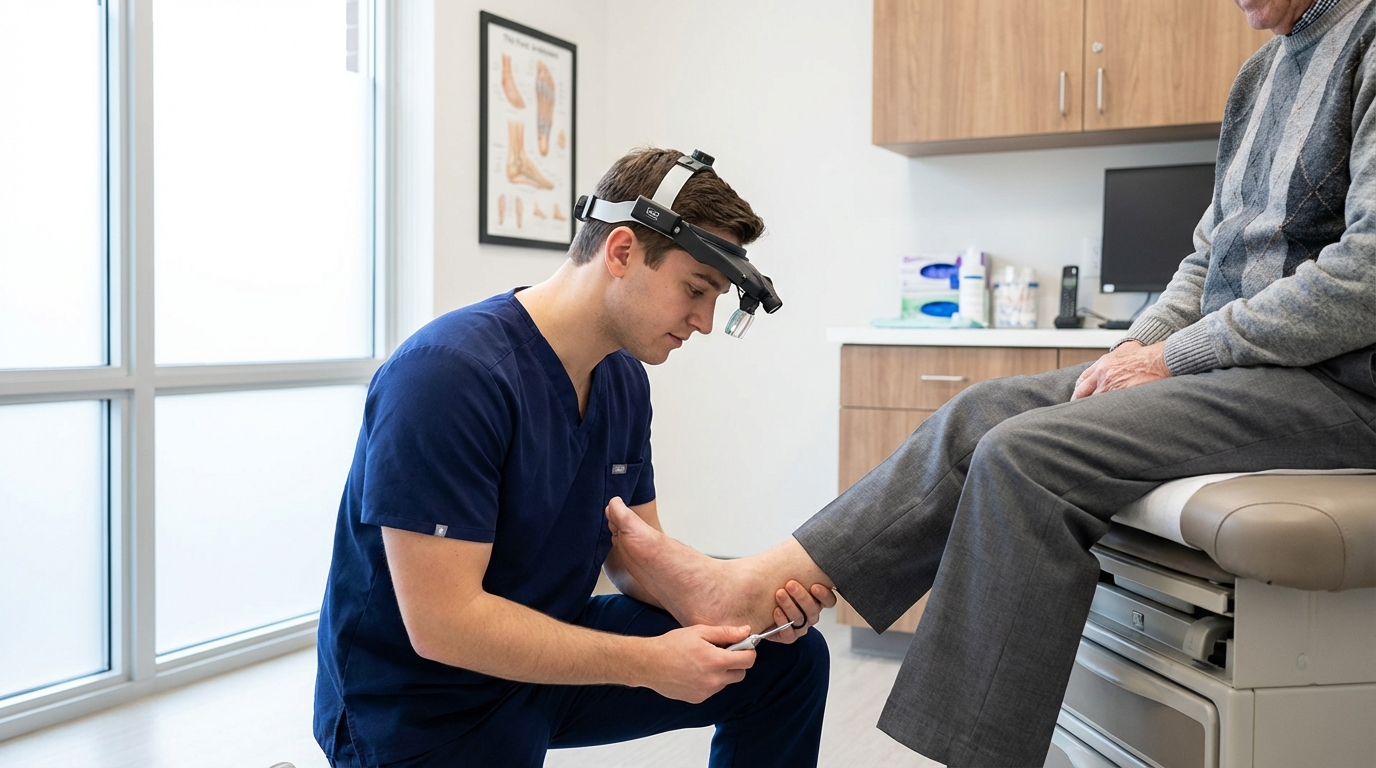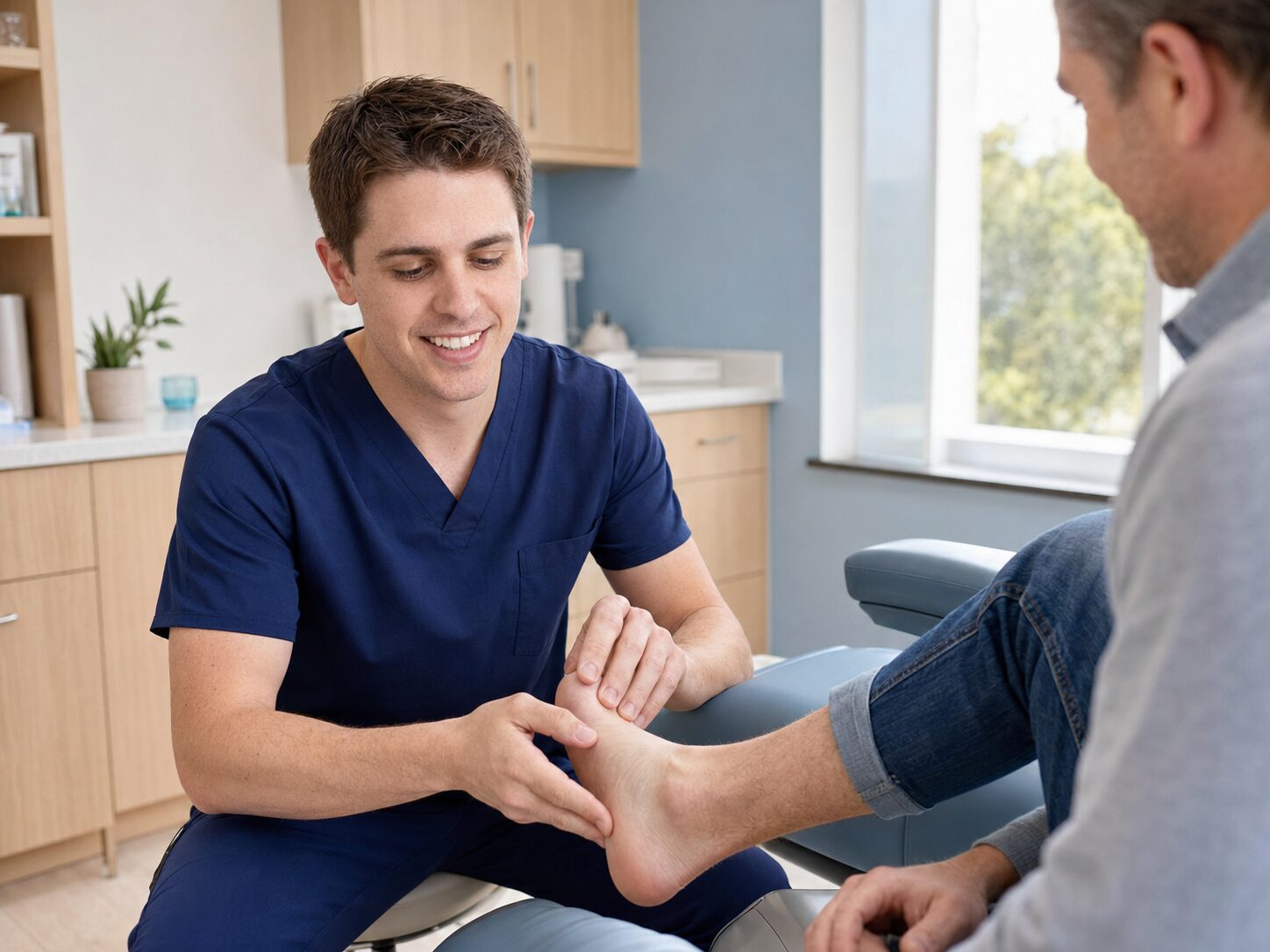
Flat feet — also called pes planus or fallen arches — are a common structural variation where the arch of the foot makes little to no contact with the ground when standing. Some people have flat feet their whole life without any problems. Others develop symptoms that affect how they walk, stand, or stay active.
If you are searching for information about flat feet symptoms or treatment near Prosper, TX, here is what is worth knowing.
Flat feet symptoms to watch for
Not everyone with flat feet will have symptoms. But when flat feet do cause problems, the signs typically include:
- Pain or aching along the inside of the foot, ankle, or arch area
- Foot fatigue that comes on quickly during walking or standing
- Swelling along the inside of the ankle
- Pain in the heel or ball of the foot from altered pressure distribution
- Knee, hip, or lower back pain caused by the way flat feet affect overall alignment
- Difficulty standing on tiptoes or reduced calf strength
- Shoes that wear unevenly on the inside edge
Pain is not always the first sign. Some patients notice fatigue before they notice pain, especially during longer walks, exercise, or standing-heavy jobs.
Flexible vs. rigid flat feet
There are two main types:
- Flexible flat feet — the arch disappears when standing but reappears when sitting or standing on tiptoe. This is the more common type and is often asymptomatic.
- Rigid flat feet — the arch is absent in all positions. This type is more likely to cause symptoms and may indicate an underlying structural or joint problem.
The distinction matters for treatment because a flexible flat foot that is not causing problems does not necessarily need intervention.
What causes flat feet
Flat feet can be present from childhood or develop over time. Common causes and contributing factors include:
- Genetics — foot structure is often inherited
- Posterior tibial tendon dysfunction (PTTD) — a weakening or tearing of the tendon that supports the arch, often seen in adults with acquired flat feet
- Injury to the foot, ankle, or tendon
- Arthritis affecting the joints of the foot
- Pregnancy, which can relax ligaments and change foot structure
- Obesity and age-related tendon changes
Flat feet treatment in Prosper, TX
Most flat feet do not require surgery. When treatment is needed, it typically focuses on reducing symptoms and improving function:
- Supportive footwear — well-fitted shoes with arch support can significantly reduce strain
- Custom orthotics — foot orthotics designed for your arch pattern and foot mechanics can redistribute pressure and reduce fatigue and pain
- Stretching and strengthening exercises — targeting the calf, Achilles tendon, and intrinsic foot muscles can improve arch function
- Activity modification — reducing high-impact activity temporarily while symptoms settle down
- Bracing or physical therapy — for posterior tibial tendon dysfunction or more significant cases
- Surgical options — reserved for rigid flat feet, PTTD that does not respond to conservative care, or significant structural problems affecting function
TSB Podiatry evaluates and treats flat feet for patients in Prosper and the surrounding area, including Celina, Frisco, and McKinney.
When flat feet are worth evaluating
If flat feet are causing pain, fatigue, balance problems, or are changing the way you walk — especially if symptoms have been present for more than a few weeks — it is worth getting a professional evaluation. Catching posterior tibial tendon dysfunction early, in particular, makes a significant difference in the range of treatment options available.
TSB Podiatry offers same-day appointments when scheduling allows, as well as Saturday and Wednesday evening availability for patients who need care outside standard work hours.
Call (972) 314-5177 or book online through Zocdoc to schedule an evaluation at our Prosper, TX office.