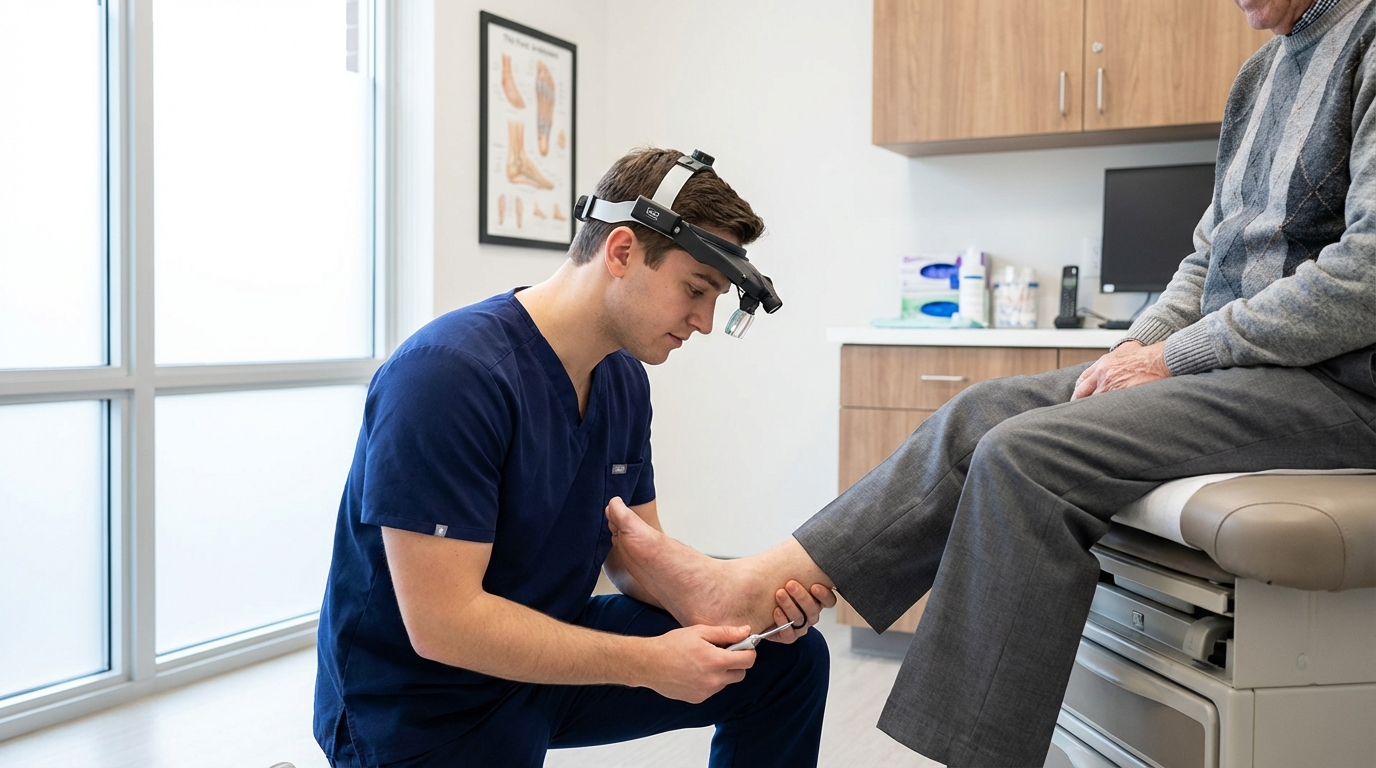
Ingrown toenail removal sounds bigger than it usually is. In many cases, the goal is not to remove the whole toenail. The goal is to remove the painful edge that is digging into the skin, calm the irritation, and reduce the chance that the same side keeps coming back.
When removal may be recommended
- The nail edge is buried in the skin and pain is not settling down
- Redness, swelling, drainage, or infection concern is present
- The same toenail keeps becoming ingrown after trimming or home care
- Shoes, walking, work, or activity are being affected by toe pain
What usually happens during the visit
Dr. Boehm first evaluates the toe, the nail shape, the surrounding skin, and whether there are signs of infection. If a procedure is needed, the toe is typically numbed before the painful nail border is removed. For a recurring ingrown toenail, part of the nail root may also need to be treated so that edge is less likely to grow back into the skin again.
Is the whole toenail removed?
Not usually. Many ingrown toenails can be treated by removing only the problem portion of the nail. Full toenail removal is not the default approach, because the right treatment depends on how much of the nail is involved, whether the problem is recurring, and what will give the toe the best chance to heal properly.
What to expect afterward
After treatment, the toe is bandaged and aftercare instructions are reviewed. Soreness, drainage, and temporary shoe limitations can happen while the area heals. The details vary by patient, especially if infection, diabetes, circulation problems, or a long-standing nail problem is part of the picture.
When to schedule instead of waiting
If an ingrown toenail is infected, keeps returning, or is painful enough to change how you walk, it should be checked. Waiting often gives the irritated tissue more time to swell around the nail, which can make the problem harder to manage at home.